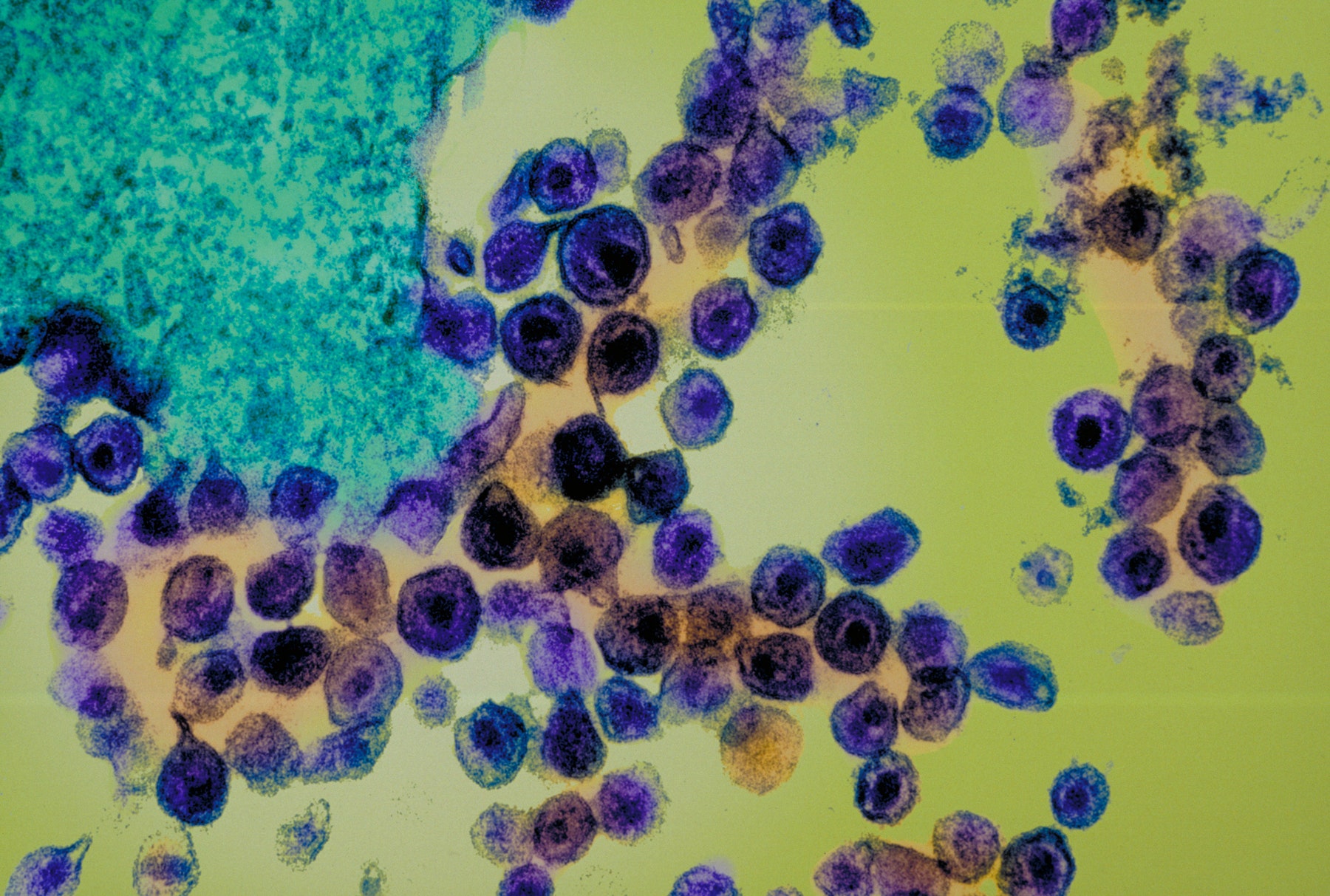

by The Francis Crick Institute – MedicalXpress –
Three years ago, George Kassiotis and his team made an unexpected discovery: A specific way of producing a protein called calbindin was found to help cancer cells survive by preventing them from aging. This left Kassiotis, who runs the Crick’s Retroviral Immunology Laboratory, confused. Why would a mechanism that boosts cancer growth exist in the first place?
In high amounts, calcium can become toxic. Calbindin removes calcium from the cell, and it’s normally found in the brain and the kidney, where calcium levels need to be tightly controlled. But Kassiotis’ team found that a certain form of calbindin was present in lung cancer cells, switched on by a remnant of viral DNA now embedded in our genome.