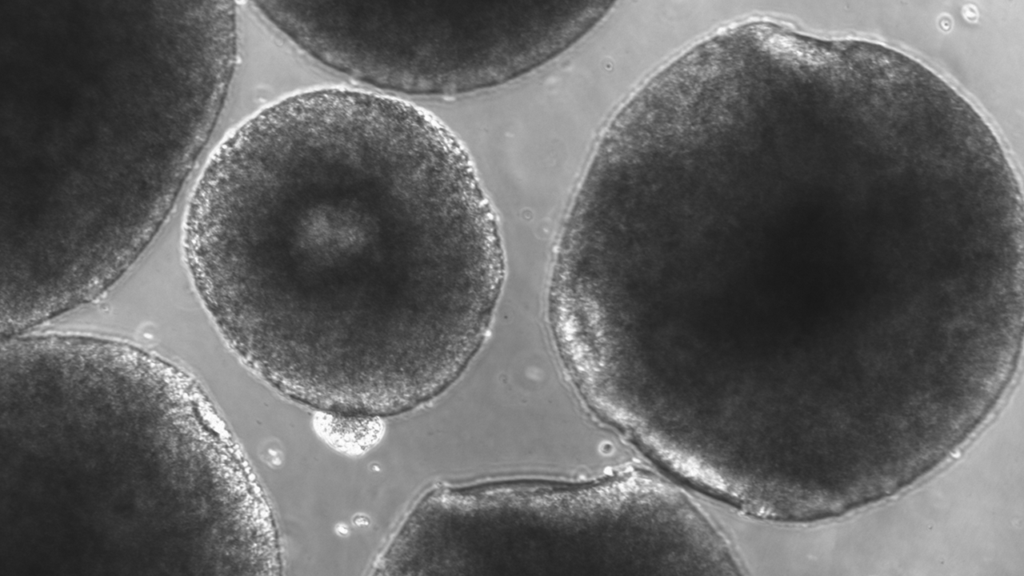
What came back from the International Space Station (ISSInternational Space Station) in 2019 was, to the naked eye, almost nothing. A few specks, roughly the size of a pea, suspended in liquid inside a sealed container. Under a microscope, though, they resolved into something stranger: tiny spheres of human cells that had, over months, organized themselves into rough three-dimensional models of human brain development. Grown without blood vessels or sensory input, they lacked consciousness, but had, after just 30 days in orbit, begun to show signs of aging.
How Space Is Opening a Window Into the Brain